I believe everyone will have a headache when choosing fuses, because there is no good guidance. The following are the factors involved in fuse selection. You can choose the most suitable fuse according to these ideas.
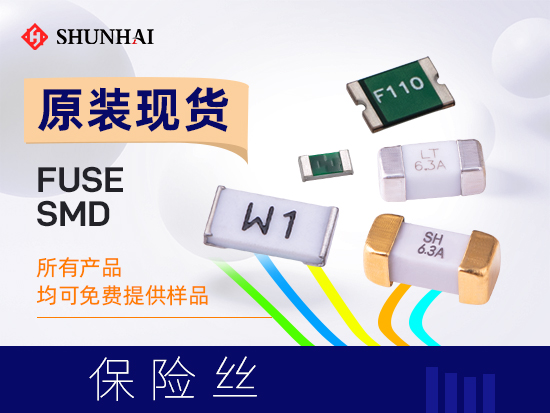
1. normal working current: at 25C, the reliable working current of fuse is usually 75% of rated current to avoid failure. For example, in 25C environment, it is generally not recommended to use a fuse with a rated current of 10 A to work above 7.5 A;
Second, the application voltage AC or DC: the rated voltage of the fuse must be equal to or greater than the voltage of the application circuit;
III. Ambient temperature: The higher the ambient temperature, the hotter the fuse works and the shorter its life. On the contrary, the longer the working life at low temperature. When the normal working current approaches or exceeds its value, the fuse will also become hot;
4. Overload current: It defines the current that the circuit needs to be protected under fault conditions. The fault can be current, current or maximum fault time. In the matching of fuse and circuit, the time-current curve should be considered, but remember that the curve is made based on average data;
V. Maximum fault current: The rated value of the fuse fusing current must reach or exceed the maximum fault current of the circuit;
VI. Pulse (sudden change of current, surge current, starting current and circuit transient): The conditions of electric pulse may vary greatly in different applications. Different fuse structures may not react equally to a given pulse condition. Thermal cycle and possible mechanical fatigue caused by electric pulse will affect the life of fuse. Initial pulse or starting pulse is normal for some applications. In these applications, products including thermal delay design should be elected for fuses, so as to maintain normal starting pulse and still provide protection in case of long-term overload. For the selection of fuse for starting pulse, the time-current curve and I2t rating of fuse should be referenced and compared.
VII. Physical size limitation: Please refer to the manufacturer's data manual for information on fuse length, diameter and height;
VIII. Institutional approval required: refer to the manufacturer's data manual for information on institutional approval of specific equipment, such as UL, CS, VDE, METI or MITI. Military requirements need special consideration;
IX. Fuse characteristics: know the installation type/overall dimensions, easy disassembly, axial leads, visual indication and other information. Please refer to the manufacturer's data manual;
X. characteristics and re-evaluation of fuse holder: please refer to the manufacturer's data manual for information about clips, mounting blocks, panel mounting, PCB mounting and RFI shielding;
XI. Application test and verification before production: verify the selection by requiring samples to be tested in actual circuits. Before evaluating samples, make sure that fuses have good electrical and cable connections. The test shall include normal life test and fault overload test to ensure that the fuse works normally in the circuit;


