As we all know, any product will have the influencing factors of shelf life and product quality, so it is necessary to carefully check the product manual when using it, so the fuse is no exception. What are the factors affecting fuse life? Fuses are mainly used for circuits. When the circuit has overcurrent or overvoltage, it will fuse and cut off the current, thus protecting the safe operation of the circuit. Generally speaking, the following three factors will affect the service life of fuses.
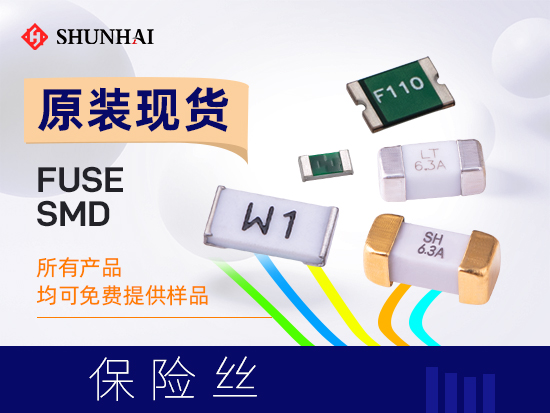
Three major factors affecting fuse life are as follows
(1) contact parts. We know that a fuse is a relatively small device. When applied to circuits, the fuse contacts the length and cross-sectional area of pipe clamps and connecting wires. Excessive contact resistance between the clamps of the fuse will damage the life of the fuse. In UL standard, the contact resistance between the fuse and the clamp is less than 3 milliohms during the experiment.
(2) Working environment temperature. The parameter values of fuses are all in the standard temperature environment. If the working environment is too high, it will affect the life of fuses, and if it is too low, it will affect the change of fuse parameter values. For slow melting fuses, such as tin balls, when the temperature is about 160 degrees, tin begins to diffuse to metal wires. When the temperature is about 200℃, the melt begins to oxidize violently.
With the oxidation of fuse from outside to inside, multiple diffusion and thermal stress fatigue, the life of fuse will be shortened gradually. Therefore, it is suggested that the delay fuse should not work in the environment above 150℃ for a long time, and the quick fuse should not work above 175~225℃ for a long time.
(3) Pulse current. In practical applications, fuses often encounter pulse current. Without pulse current, the service life of fuse wire will be prolonged, because pulse impact will produce thermal cycle, which will lead to diffusion, oxidation, thermal stress and even acceleration of fuse. Fuses age with the increase of pulse energy and times, and the anti-impact life of fuses depends on the ratio of I2t of pulses to I2t of fuses themselves.


