Should we choose traditional fuse or self-recovery fuse PPTC? Generally speaking, the fuse should be elected according to the product circuit, and each fuse has its own advantages and applications.
For example, many designs of computers, peripheral devices and portable devices (such as smart phones, tablet computers, etc.) require self-healing fuses because they can reset themselves. If the traditional fuse is used, it must be replaced every time the overcurrent occurs, which is unacceptable to many users.
In other cases, it may be better to use the traditional fuse, because the fuse can completely cut off the current under fault conditions. This may be a better choice, giving priority to safety or avoiding damage to downstream circuit equipment. The use of fuses is also very useful for fault diagnosis, which can help equipment designers and users find the root cause of overcurrent fault.
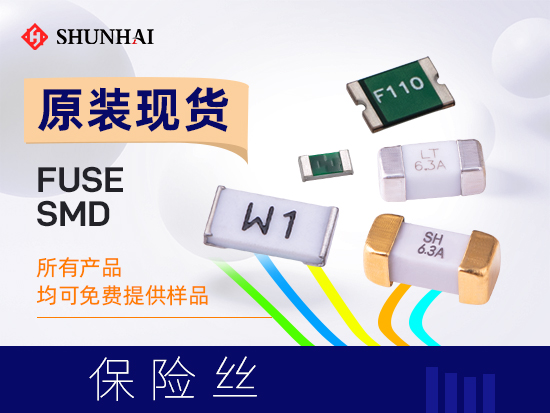
As we all know, both traditional fuses and self-recovery fuses belong to overcurrent protection components, so facing the problem of overcurrent protection, circuit designers have the right to choose the technology used, and traditional fuses and polymer-based self-recovery fuses (positive temperature coefficient) devices are the most common solutions. If we know the difference between these two parts, we can simplify the process of choosing the most suitable protection device.
Fuses have always been regarded as disposable devices. In case of overload, the fuse blows out once to provide overcurrent protection, and then must be replaced. The core part of traditional fuse is a piece of wire. When the current is too high, the wire will be heated to the melting point. After the wire is blown, the current in the circuit will drop to zero.
Then how to choose between self-recovery fuse and traditional fuse is explained as follows
Over-current path protection can be realized by using traditional fuse or self-recovery fuse. Both of them realize the protection function by responding to the heating phenomenon caused by excess current in the circuit. Fuses cut off the current by blowing, while self-recovery fuses limit the current by changing from a low resistance state to a high resistance state. By fully understanding the performance differences between the two devices, it is easier to choose the best circuit protection scheme.
The biggest difference between the two is that the self-recovery fuse can self-recover, and the general self-recovery procedure after overload is to cut off the power supply and cool the device. The two products are different in operating characteristics. Terms used in self-recovery fuses are usually similar to those used in traditional fuses, but not completely consistent. However, this is the case with two parameters, such as leakage current and breaking rating.
leakage current
When overload occurs, the self-recovery fuse changes from low resistance state to high impedance state, which is usually called "tripping". Limit the current to a certain leakage level, so as to achieve the purpose of protection. The leakage current can rise from about 100 mA at rated voltage to hundreds of mA at low voltage. However, when the fuse is overloaded, the fuse blows, the current is completely cut off, and hundreds of milliamps rise at low voltage.
breaking current
Maximum short-circuit current specified by self-recovery fuse at rated voltage. The fault current is the maximum current that the device can bear, but PTC usually does not cut off the current (please refer to the above leakage current. According to the scenario described in, the volume of mass in conceptual design is analyzed. The rated current of standard PTC short circuit is 40A. The fuse actually cuts off the current in response to overload. The rated breaking current ranges from several hundred amperes to 10,000 amperes at rated voltage. Circuit parameters can judge the selection of components according to the rating of standard devices.
rated voltage
The rated voltage of conventional self-recovery fuses is below 60V, but the rated voltage of fuses is above 600V. Rated current: the rated working current of self-recovery fuse reaches 11A, but the maximum rated working current of fuse may exceed 20A.
rated temperature
The upper temperature limit of self-recovery fuse is generally 85, and the maximum working temperature of fuse is 125°C .. The rated temperature of these two devices must be lowered when working in an environment above 20 C. Circuit designers can also refer to other working parameters when selecting self-recovery fuses and fuses for overcurrent protection.
Resistance
If the ratings are similar, it can be seen that the resistance of the self-recovery fuse is twice that of the fuse (longer time). Time-current characteristics: Comparing the time-current curves of self-recovery fuse and fuse, it can be seen that the response time of self-recovery fuse is the same as the delay of fuse.


