Recently, a friend left a message asking whether the rated current and fusing current of fuse are the same. Answer: No. The interpretation is as follows.
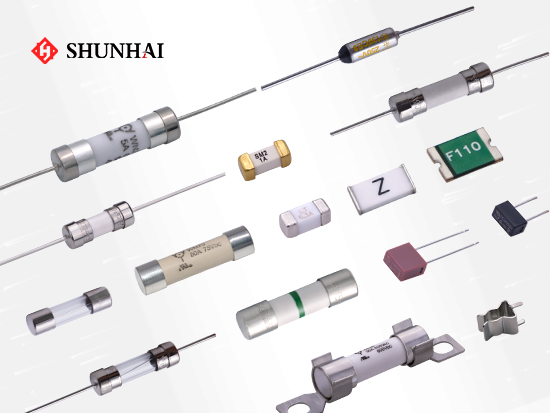
Fuse rated current
The rated current refers to the current when the electrical equipment operates at rated power under rated voltage. The rated current of electrical equipment refers to the allowable current for long-term continuous operation of electrical equipment under rated environmental conditions (ambient temperature, sunshine, altitude, setting conditions, etc.). The current of electrical equipment during operation shall not exceed its rated current.
Fuse blowing current
Fuse current: Fusing current unit: mA, a, etc. The maximum current that the guide wire can pass when blown. However, with the increase of wire resistance, its fusing current will also decrease. When the cross-sectional area of the conductor is constant, the longer the length, the greater the resistance and the smaller the fusing current.
Difference between rated current and fusing current of fuse
Generally, the rated current of the same fuse is less than the fusing current. The fusing current is 1.1~1.3 times of the rated current. The rated current refers to the maximum current of a fused circuit. For example, when the maximum current allowed in the circuit is 10A, the rated current of a suitable fuse is 10A. Blow-out current means that when the current passing through the fuse exceeds the current value, the fuse blows out, thus protecting the circuit.
Conclusion: The concepts of rated current and fusing current are different, which should only be regarded as the nominal value of specifications. The degree of current flowing through fuses and when fusing are specified in the benchmark of fuse products, and they are different according to different regulations of the benchmark. Fuses have a value of "fusing coefficient" greater than "1" (generally between 1.1 and 1.5), which is the ratio of "normal non-fusing current" and "rated current". Therefore, even if the current flowing through the fuse is greater than its rated current, but does not exceed the conventional non-fusing current, the fuse should not be blown.


