Question: Why can't fuse resistance replace fuse?
Answer: If the circuit is overloaded with resistors, there are certain restrictions. The reason is that when the current passing through the resistors exceeds the large carrying capacity of the resistors, the resistors will be burned, which will open the circuit and cause the circuit to be burned by excessive current when the circuit is overloaded. Therefore, although the resistor has overload protection function similar to fuse, it cannot play a very good role in circuit overload protection, so it is unsafe to replace fuse with resistor.
Fuses need to have three basic functions in the circuit: protection function, bearing function and safety function.
The protection functions of fuse include overload protection and short circuit protection. When the circuit in the circuit exceeds the carrying capacity of the circuit, the fuse must act within the specified time range to block the current passing through the circuit and protect the circuit or components from being damaged by overload current. If the fuse is replaced by the safety resistor, the reaction time and action duration of the safety resistor can be as accurate as the fuse, and the circuit cannot be protected in time. Although the overload current can be blocked, the circuit cannot be protected in time when the overload current is too large, which is much worse than the fuse, so the fuse cannot be replaced by a safety resistor, otherwise the circuit will be overloaded or the circuit will damage the circuit and circuit components.
The load-bearing function of the fuse is guaranteed by the melting heat energy value, so that the fuse can withstand the pulse impact of certain energy with necessary switching times, so it needs to be calculated and evaluated when selecting. However, the fuse resistor itself has no similar technical specifications, so it will be broken by pulse if it is used small, and it will have no protection function if it is used large.
The safety function of the fuse is guaranteed by the rated voltage, breaking capacity and other indicators, especially the authoritative third-party safety regulations certification. However, the fuse resistor itself is not a safety element and does not require safety certification. As you can imagine, it has insufficient safety and protection function, and it is difficult to ensure the unsafe surroundings during burning.
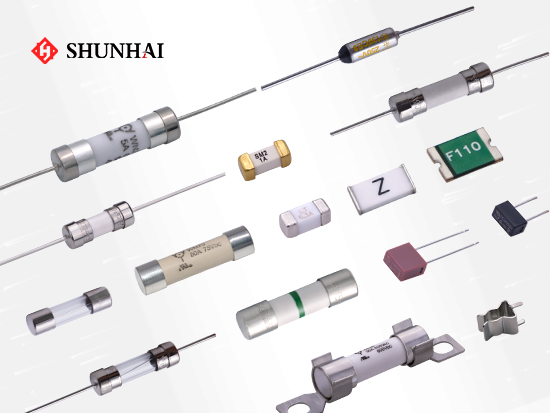
It can be concluded that although the fuse resistance has the action of over-current, it can not really play the same role as a fuse. Fuse resistors can be used in some circuits, which can reduce some costs. However, if overload protection elements are installed in circuits, fuse resistors cannot be used instead of fuses.


