High power surface mount resistors: characteristics, applications, and selection points
Surface mount resistors are fundamental components in modern electronic circuits, and high-power surface mount resistors are key products that meet the demanding energy processing requirements. Compared with conventional surface mount resistors, the core difference of high-power surface mount resistors is that they can safely dissipate higher electrical energy while maintaining a miniaturized surface mount form.
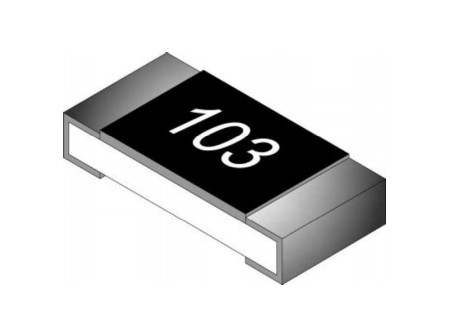
1、 Core Features and Definitions
Usually, we classify surface mount resistors with a rated power of 1 watt or more as high-power surface mount resistors. Its design goal is to solve the problem of heat dissipation in compact spaces. To achieve this goal, high-power surface mount resistors have adopted multiple special designs and materials:
Optimized heat dissipation structure: This is the most critical point. In addition to conventional ceramic substrates, the bottom of high-power surface mount resistors is permanently equipped with metal heat sinks or thermal conductive coatings, and may have larger external dimensions (such as 2512, 3812, etc.) to increase the thermal conductivity area.
Special materials and processes: using ceramic substrates with high thermal conductivity (such as alumina and aluminum nitride) and stable thick or thin film alloy resistance materials to ensure stable performance at high operating temperatures.
Wide operating temperature range: able to withstand environmental temperatures ranging from -55 ° C to+155 ° C or even higher, and maintain reliable power capacity within this range.
2、 Main application areas
High power surface mount resistors are widely used in applications that require efficient energy conversion, absorption, or release due to their excellent power processing capabilities and reliability
1. Power and energy management: Switching mode power supplies (SMPS), buffer circuits in DC-DC converters, pre charge discharge circuits, current detection and current sharing.
2. Automotive electronics: The battery management system (BMS), motor drive controller, LED light drive, power inverter, etc. of electric vehicles require components to withstand high temperature vibrations.
3. Industrial and control equipment: power circuits in industrial equipment such as frequency converters, servo drives, high-power PLCs, and welding machines.
4. Consumer electronics: high-end audio power amplifiers, high-power charging adapters, and power modules for high-performance household appliances.
5. Communication infrastructure: base station power amplifiers, RF loads, server power supplies, etc.
3、 Selection and usage precautions
The correct selection and application of high-power surface mount resistors are crucial for the long-term stable operation of circuits
Reduced usage: In practical applications, the principle of reduced usage should be followed. At higher ambient temperatures, the power consumption must be reduced according to the derating curve provided by the manufacturer, and continuous operation under extreme parameters is never allowed.
Pay attention to PCB heat dissipation design: The performance of high-power surface mount resistors greatly depends on the heat dissipation design of the PCB. Sufficient copper plated heat dissipation pads should be provided for it, and through holes, heat should be conducted to the inner or back copper layer. If necessary, heat sinks can be added.
Pay attention to key parameters: In addition to rated power and resistance, careful consideration should also be given to temperature coefficient of resistance (TCR), withstand voltage, long-term stability, and welding compatibility of end electrodes.
Welding process: Due to the possibility of large volume and heat capacity, it is necessary to ensure that the reflow soldering temperature curve is set reasonably to ensure the firmness of the solder joint and avoid virtual soldering or thermal damage.
In summary, high-power surface mount resistors are one of the cornerstones of modern high-density and high reliability electronic design. Understanding its unique design principles, combined with rigorous circuit board heat dissipation planning and derating usage, is necessary to fully utilize its efficiency and ensure excellent performance and long lifespan of the product in power intensive applications.


